MINE
Eight Identical Cor-Ten Cubes
around the Hokushin Plaza

The Idea
This is a project of reduction. Where the architectural commission asked for eight separate functions — a martial-arts dojo, a master suite, a guest dormitory, a kitchen, a family living room, a bath, a contemplation cell, and an acoustic music room — we propose one form, repeated eight times, and let function be expressed solely through the floor level of the interior.
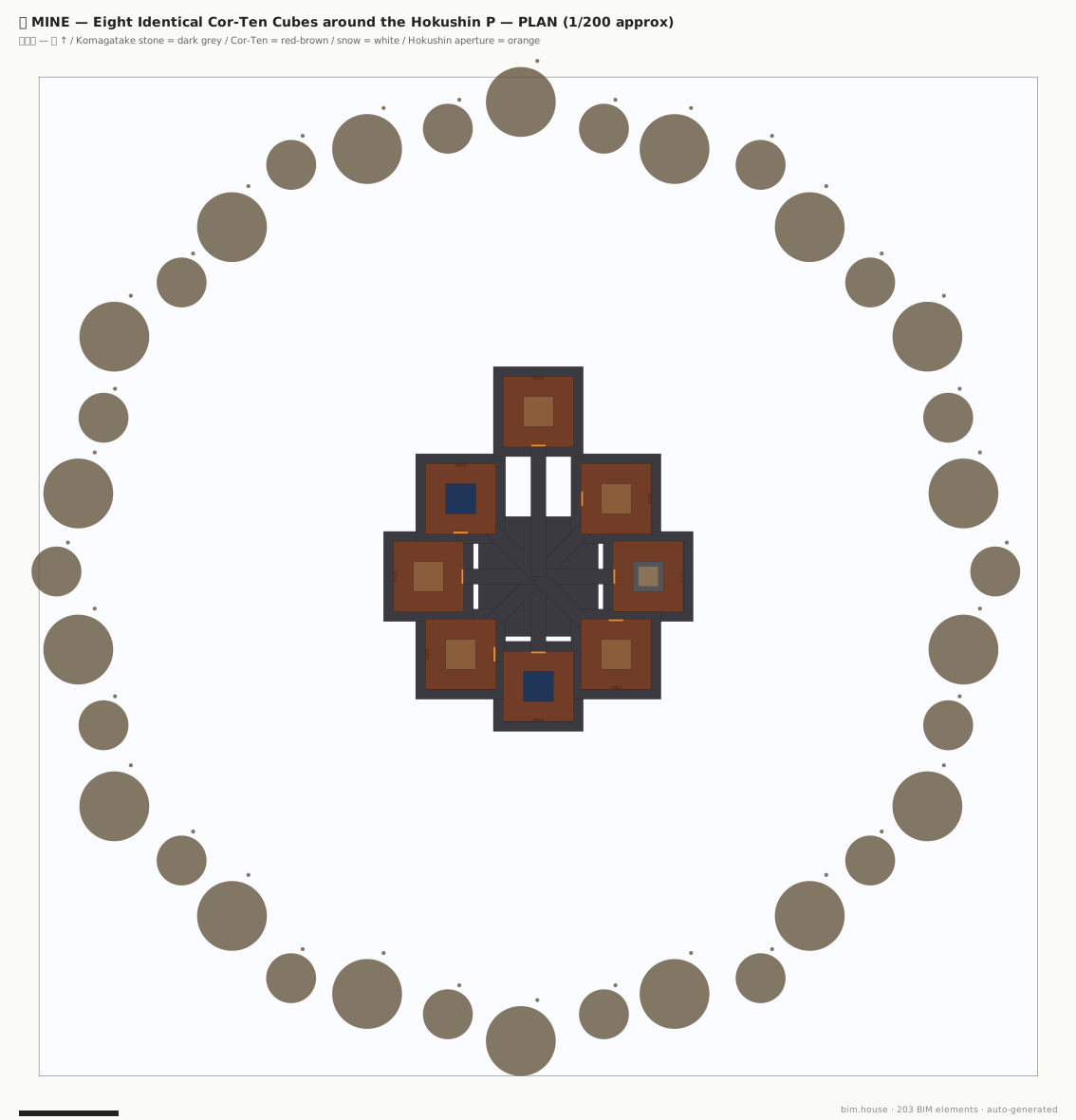
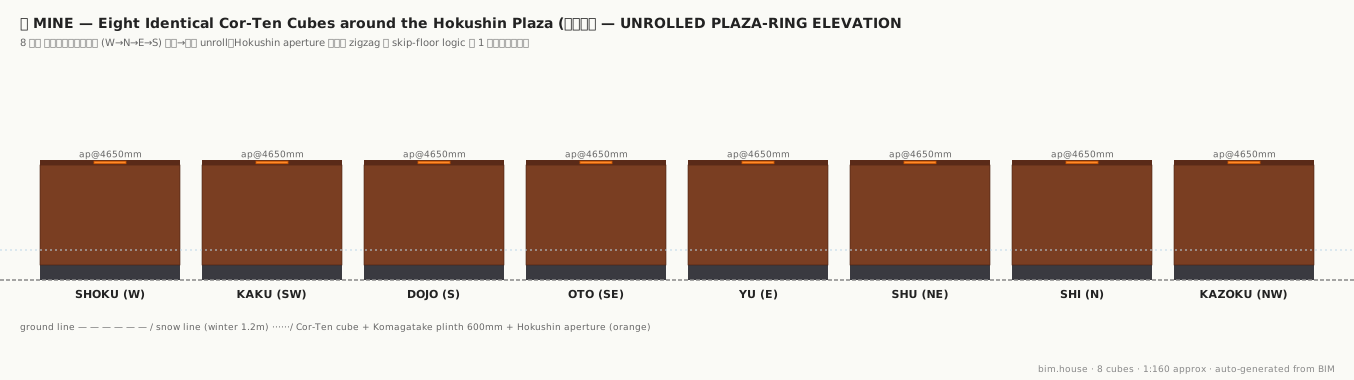
The eight cubes are identical: same envelope, same material, same single aperture, same proportions. What varies is the floor elevation, ranging from −2,500 mm (the sunken onsen bath) to +1,500 mm (the elevated dojo mat). This skip-floor logic is registered on the exterior in the height of each cube's single aperture — producing a zigzag of light-slits around the plaza ring that maps the inhabited rhythm of the site.
Site
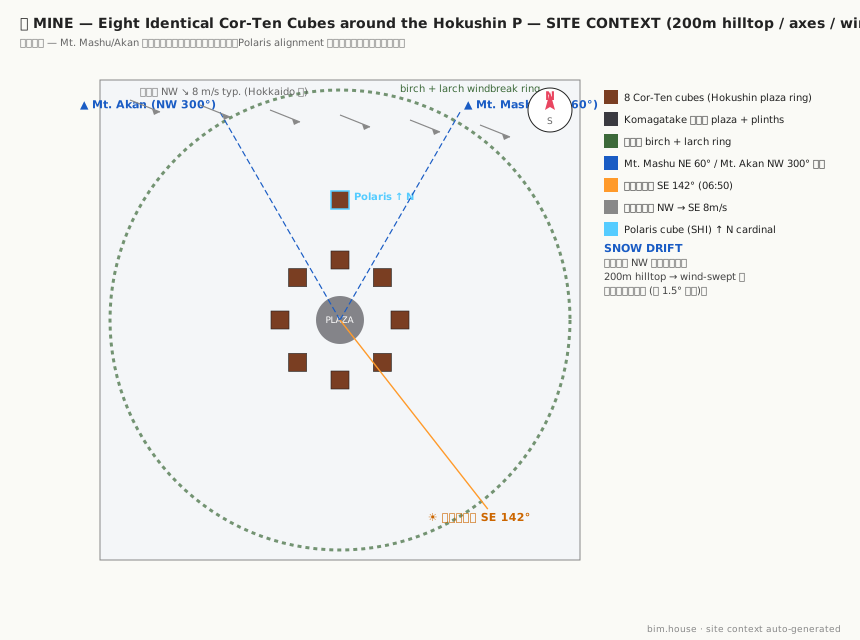
Shibecha-cho Nishikumaushi-genya 4-sen, Hokkaido, Japan. A 200-metre hilltop plateau, 5,000 m² of cleared meadow surrounded by a birch and larch windbreak ring. To the northeast, Mt. Mashu — the perfect cone of a caldera lake. To the northwest, Mt. Akan. The winter sunrise breaks at 142° southeast at 06:50; the prevailing seasonal wind sweeps from the northwest. Polaris sits 43° above the northern horizon at this latitude.
The site is in Hokkaido's heavy-snow region (C7) with a ground snow load of 1.3 kN/m² and a frost depth of −1.0 m.
Discipline
The project commits to three materials and refuses all others.
① Cor-Ten Steel
6 mm hot-rolled weathering-steel plate on all four walls and the flat roof. Stabilises into a dark red-brown Fe₂O₃·H₂O patina at year 2. Maintenance-free for 100 years.
② Komagatake Andesite
Locally quarried volcanic stone (Ko-c2 ash-fall layer) dry-stacked as a 600 mm plinth ring around each cube and as the circular plaza pavement. Acquires moss and green algae over decades.
③ Hokushin (北辰) Motif
The five-pointed Polar Star with radiating rays, laser-cut into the Cor-Ten apertures. This is the emblem of the Meiji-period Hokkaido Kaitakushi (Pioneer Office, 1869–1882) — Hokkaido's own settler iconography. At night, interior light projects the star pattern onto the surrounding snow.
✗ Dropped: Ainu Motifs
An earlier iteration used Ainu folk textile patterns. Without a formal partnership with the Ainu Association of Hokkaido and an Ainu co-author, this was abandoned to avoid cultural appropriation. The Hokushin star motif takes its place — locally-specific and politically safe.
The Eight Cubes
| Compass | Cube | Floor | Aperture (ext.) | Program |
|---|---|---|---|---|
| S 270° | DOJO | +1,500 mm | +3,100 mm | 7 × 7 m SJJJF jiu-jitsu mat |
| NE 45° | SHU | +600 mm | +2,200 mm | library wall + low bed |
| SW 225° | KAKU | ±0 | +1,600 mm | 4-bed guest dormitory |
| W 180° | SHOKU | ±0 | +1,600 mm | stainless-steel island kitchen |
| NW 135° | KAZOKU | ±0 | +1,600 mm | family tatami living |
| E 0° | YU | −2,500 mm | −900 mm | sunken onsen bath |
| SE 315° | OTO | −500 mm | +1,100 mm | acoustic music / recording |
| N apart | SHI | −1,500 mm | +100 mm | contemplation cell (Polaris) |
The Polaris cube (SHI) is offset 16.5 m further north of the plaza ring, in alignment with the celestial pole. Its aperture sits low to the ground — a window into the earth, while the others read the sky.
Drawings
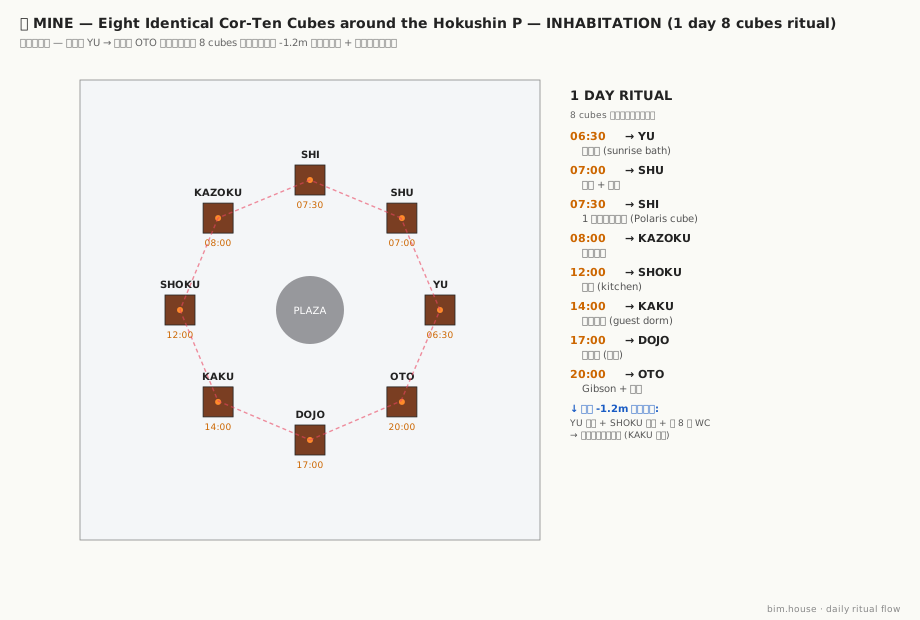
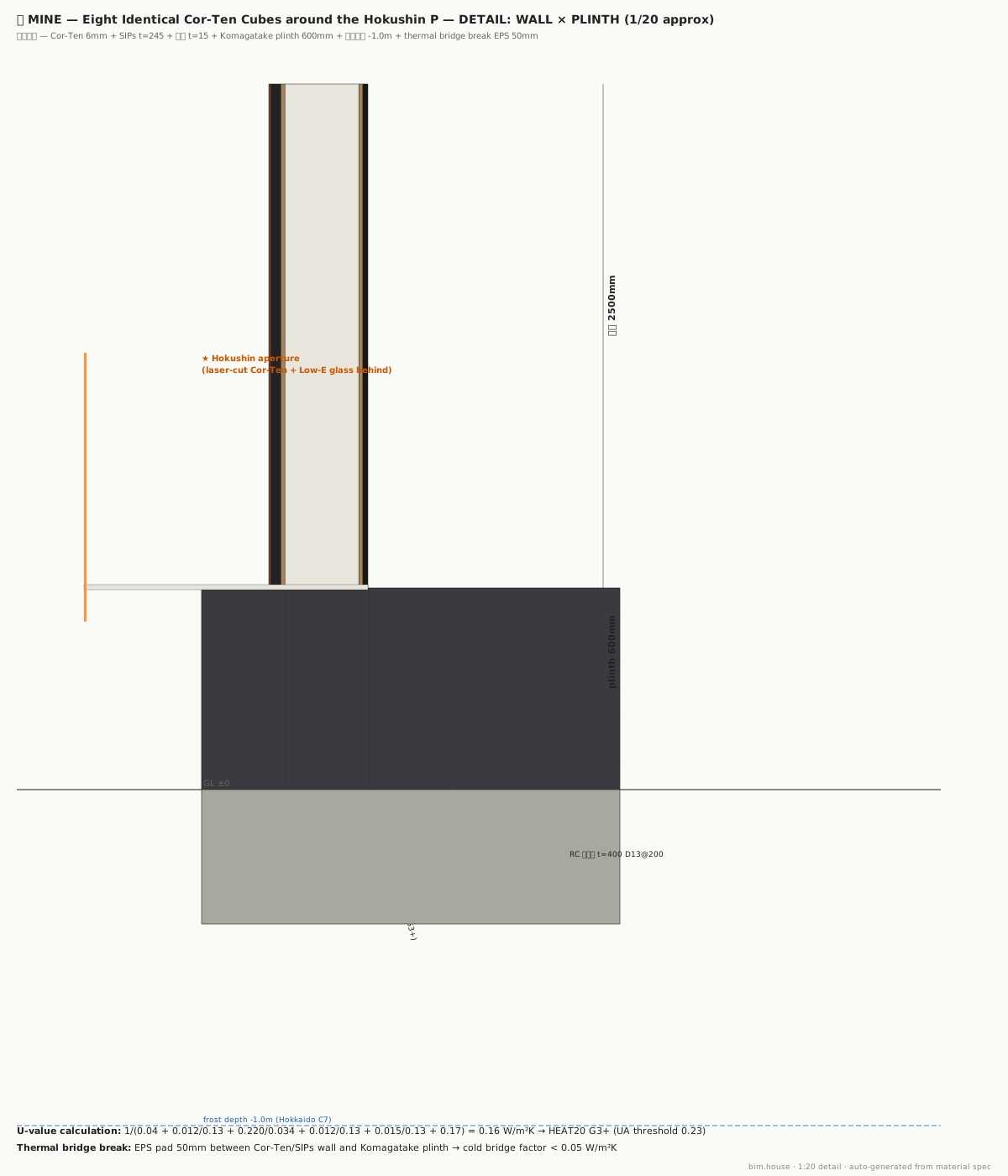
All drawings are auto-generated from the building's 195-element BIM model.




Construction
Each cube is built from structurally insulated panels (SIPs): 12 mm OSB + 220 mm EPS core + 12 mm OSB, factory-manufactured and assembled on site in three weeks. Wall U-value 0.16 W/m²K (exceeding Japan's HEAT20 G3 standard). The Cor-Ten skin is bolted to the SIPs core through stainless steel substructure. Single floor area 49 m² per cube; total gross 392 m².
The flat Cor-Ten roof has an internal 1.5° drainage slope masked by a 200 mm parapet edge, preserving the pure cube geometry externally. The 200 m hilltop's wind exposure sweeps snow off the roof; heated edge drains (Hokkaido standard) handle the residual melt-water. Beneath the plaza, a 1.2 m-deep shared utility tunnel connects all eight cubes — water, sewage, geothermal heat pump return, and LFP battery wiring run as one ring.
Power: 72 kW peak photovoltaic (9 kW × 8 cubes on the flat roofs) + 30 kWh LFP storage + two 100 m geothermal boreholes. Off-grid capable in summer; grid-tied for winter back-up.
Inhabitation
The eight cubes describe a daily ritual. Bathe at YU at sunrise (06:30). Read at SHU (07:00). One cup of coffee in the Polaris cell, SHI (07:30). Breakfast with the children at KAZOKU (08:00). Lunch at SHOKU (12:00). Tea with a visitor at KAKU (14:00). Evening training at DOJO (17:00). Record a guitar — Martin, classical, Gibson ES-350 — at OTO (20:00).
The rhythm of inhabitation is the rhythm of moving through eight separate buildings around a central plaza. The plaza is the threshold. The cubes are the rooms. The whole site is a single dwelling, distributed across the ground.
Cost & Status
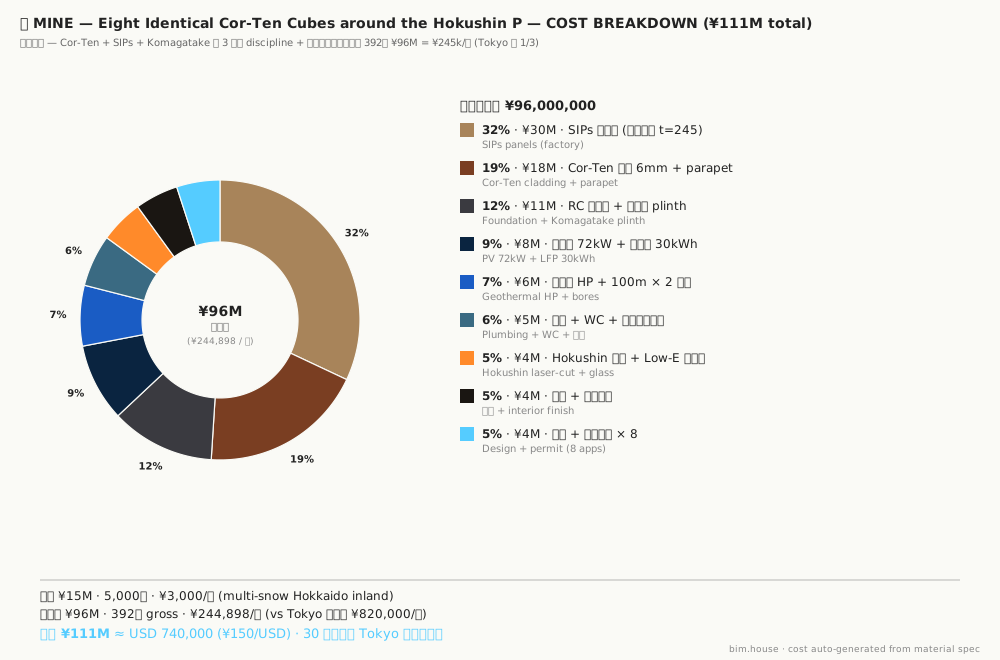
Estimated construction: ¥96 million (≈ USD 640,000) for 392 m² gross. Land: ¥15 million. Total: ¥111 million (≈ USD 740,000) — under the per-square-metre cost of a Tokyo single-family house, on a site 30× the area.
This project is published as an open architectural proposal. The BIM data (195 IFC elements), drawings, and all 9 photoreal Gemini 3 Pro renderings are downloadable in IFC, JSON, DXF, STL, and SVG formats from bim.house.
Architects: Yuki Hamada, Enabler Inc. (Tokyo) · Site: Shibecha-cho Nishikumaushi-genya 4-sen, Hokkaido · Year: 2026 · Status: Proposal · BIM: IFC4 ↓ / JSON ↓ · 3D Viewer: Three.js WebGL ↗
Photography: rendered with Gemini 3 Pro Image (gemini-3-pro-image-preview). Drawings auto-generated from BIM. Material chemistry verified to Japan Industrial Standards JIS G 3125 (weathering steel) and JIS A 5005 (volcanic aggregate).